Some conversations begin with a question and end when the answer is given. Others stay with you because they reveal something about the person sitting across from you—and about the way they see the world.
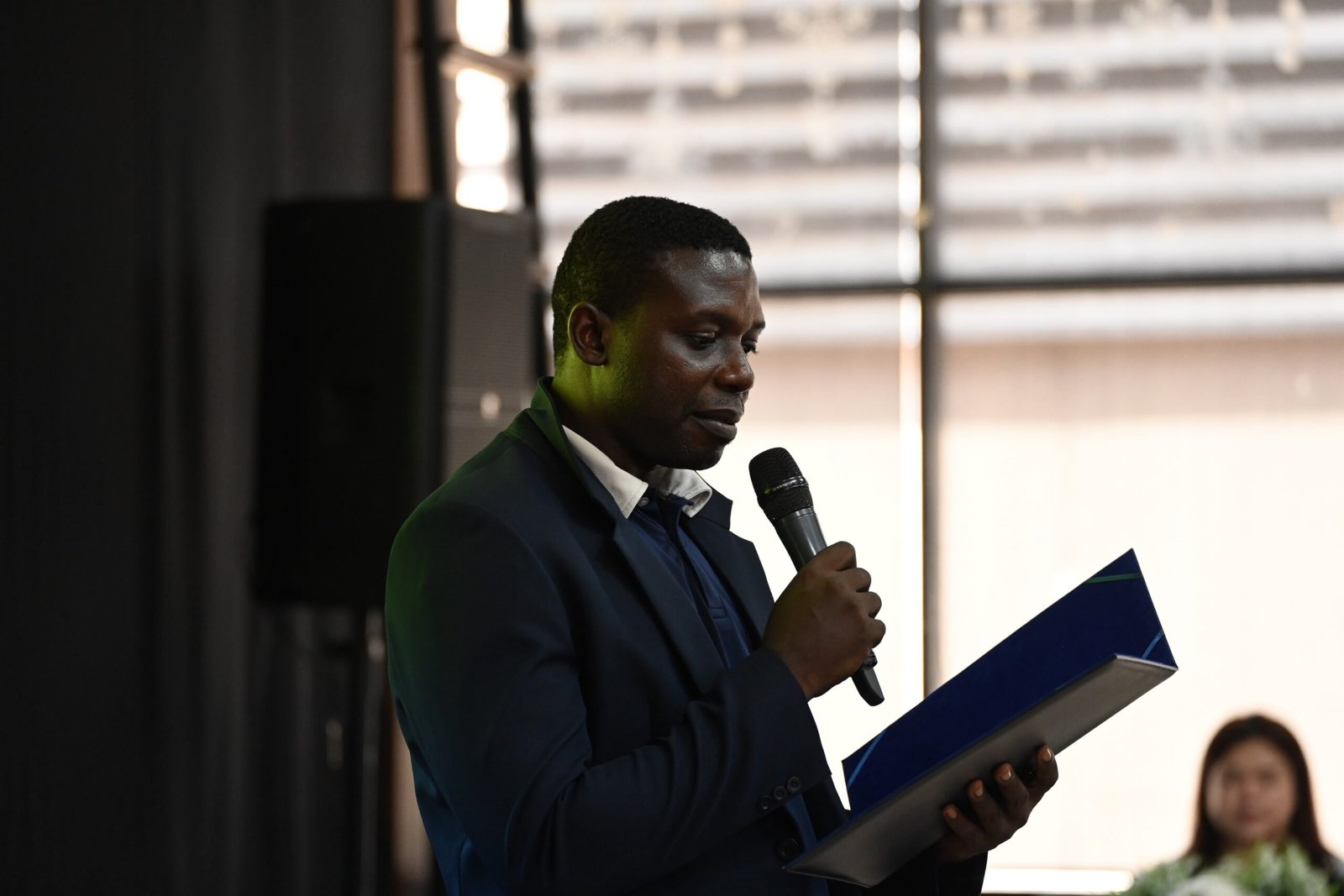
Over the past few weeks, I have had several opportunities to speak with Teacher TK, President and founder of the Equal Education Initiative. Our conversations have happened in the ordinary spaces of school life: between responsibilities, after working hours, and during the quieter days at the end of the academic term.
Yet the subjects are rarely small.
Education. Language. Opportunity. Community. The future.
What becomes apparent after spending some time in conversation with him is that the Equal Education Initiative is not something he appears to view as a short-term project. He speaks about it in years.
Three years. Five years. Ten years.
There is no particular hurry in the way he describes it.
There is, however, a clear sense of direction.

When Language Becomes More Than Language
One conversation that stayed with me concerned English.
In many societies, particularly those shaped by colonial histories and unequal access to education, fluency in English can sometimes become associated with far more than the ability to speak a language. It may be treated as evidence of intelligence, education, social standing, trustworthiness, or even personal worth.
Teacher TK questioned that assumption.
English, after all, is a language.
Being able to speak it fluently is a useful skill, just as mastering any language is a valuable skill. But fluency itself does not determine a person’s intelligence, integrity, potential, or ability to contribute meaningfully to society.
It sounds like a simple observation. Yet its implications for education are significant.
When education begins to confuse language proficiency with intelligence, there is a danger that capable students are overlooked simply because they cannot express what they know in the language that society happens to value most.
For the Equal Education Initiative, this question connects to something larger: How do we make sure that a child’s potential is not hidden behind circumstances they did not choose?
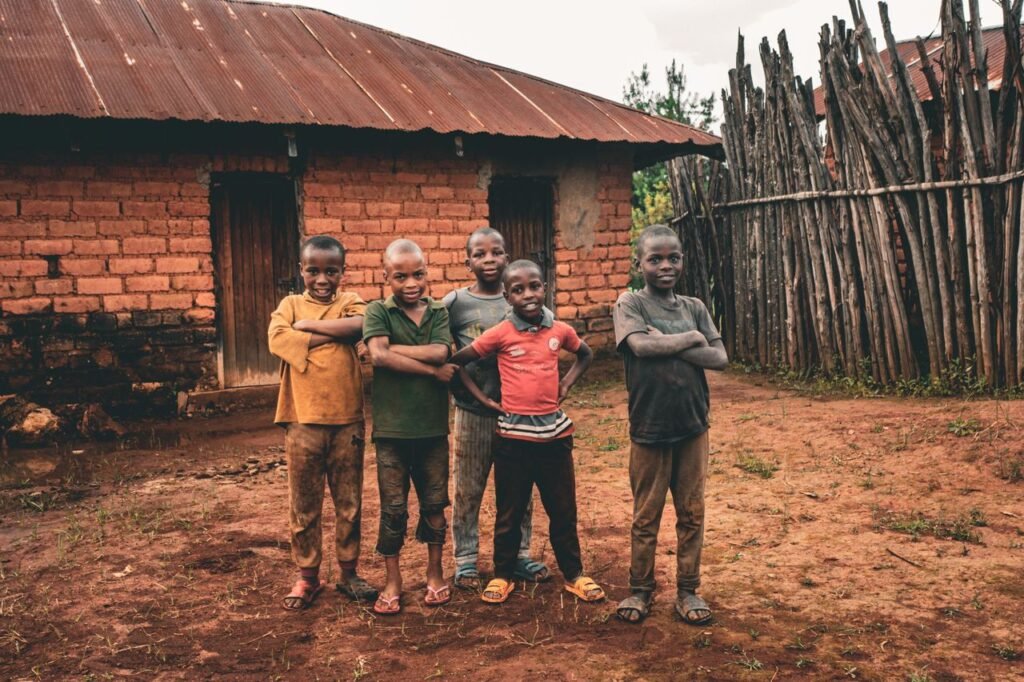
A child may lack access.
A child may lack guidance.
A child may lack confidence, resources, exposure, or someone who tells them that another future is possible.
None of those things necessarily mean that the child lacks ability.
Sometimes, what is missing is simply opportunity.
Creating the Opportunity to Be Seen
This idea appears repeatedly in Teacher TK’s vision for the organization.
The ambition is not to promise that one initiative can solve every problem facing education. It is something more grounded: to help create spaces where young people who might otherwise be overlooked can receive guidance, encouragement, support, and an opportunity to move forward.
Sometimes opportunity begins with something surprisingly small.
A conversation.
A teacher who pays attention.
A mentor.
A community connection.
A platform on which someone is finally invited to participate.
For children growing up without easy access to those things, their presence can change the direction of a life.
Perhaps this is also why Teacher TK speaks so often about people and relationships.
Over the years, he has quietly built a broad network through his professional life, his community, education, and social platforms. When he speaks about those connections, he does not describe them simply as numbers on a screen. He speaks of people accumulated through years of interaction—colleagues, friends, educators, community members, and individuals encountered along the way.
That distinction matters.
An organization does not become a community because it has followers.
It becomes a community when people feel that they have a place within it.

Thinking Beyond the Next Event
There is another characteristic that becomes noticeable in conversations with Teacher TK: patience.
Organizations today can easily become preoccupied with visibility. There is pressure to grow quickly, publish constantly, accumulate followers, hold events, and demonstrate progress almost immediately.
His approach is noticeably different.
The meetings matter. The ceremonies matter. The professional relationships matter. The events matter. But he tends to describe them as steps rather than destinations.
The real question is what they are building toward.
That perspective changes the way an organization develops.
Instead of asking only, How many people can we reach today?, it allows another question:
What can we build today that will still matter years from now?
The answer may not always be dramatic.
Sometimes it is a relationship.
Sometimes it is a system.
Sometimes it is recognizing the person who volunteered their time.
Even something as simple as preparing certificates of appreciation for volunteers emerged from this way of thinking.
A young organization may not always have the financial resources to compensate everyone who contributes to its mission. But contribution should still be acknowledged. People deserve to know that their time, effort, and willingness to participate were noticed.
Recognition will never replace fair compensation where compensation is possible. But gratitude still matters.
And organizations, especially those built around service, have to remember the human beings who make the work possible.

Education as a Long-Term Commitment
During the school day, Teacher TK serves as a vice principal and educator. In conversation, however, it becomes clear that education extends beyond the boundaries of his professional role.
He thinks about systems.
He thinks about young people who have ability but lack access.
He thinks about communities that already possess knowledge, talent, and potential but may need stronger connections between them.
And he thinks about time.
Perhaps that is the part of these conversations I have found most interesting.
There is no suggestion that meaningful change will happen overnight.
There is simply a willingness to begin building toward it.
The Equal Education Initiative is still at the beginning of its journey. Its story is still being written, its community is still developing, and many of its ambitions remain ahead.
That may be precisely why this stage matters.
Before programs become established and organizations become recognizable, there is a quieter period in which ideas are discussed, principles are tested, relationships are formed, and someone keeps asking what the work is ultimately supposed to achieve.
In conversations with its president, one idea continues to surface:
Education should help people discover what they are capable of—not decide their worth based on the opportunities they happened to receive.
And perhaps meaningful educational change begins there.
Not with the assumption that talent is absent.
But with the decision to look for it, support it, and give it somewhere to grow.
Equal Education Initiative