Reflections on opportunity, responsibility and the future we hope to build.
Most stories about education end at a familiar point. A student completes their studies, finds a career, builds a better life and looks back with gratitude at how far they have come.
But there is another question worth asking.
What happens to the opportunities that helped us succeed? Do they end with us, or can we create the same possibilities for someone else?
At Equal Education Initiative (EEI), this question sits at the heart of what we are trying to build.
Behind the organisation is a belief that education should do more than improve individual lives. It should create a cycle of opportunity, where those who have benefited from learning, guidance and support can help others find their own way forward.
For our founder and president, Takang Malvine Arrey, this belief is deeply personal.
Two Countries, One Important Realisation
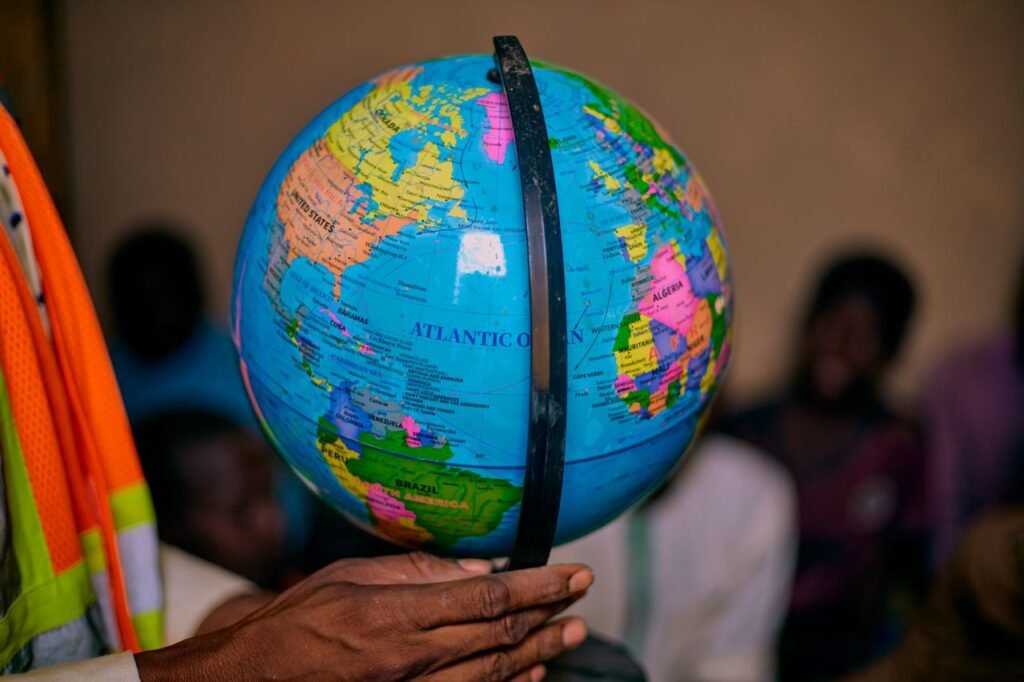
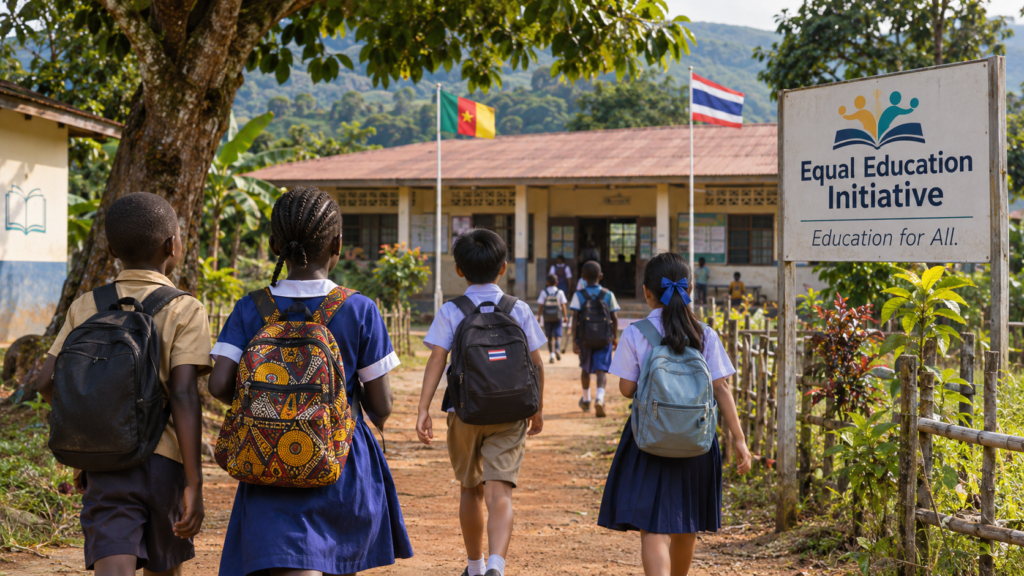
Having grown up and studied in Cameroon before continuing his professional journey in Thailand, our president has experienced education from two different perspectives.
Nearly fifteen years in the field of education, including his responsibilities as a teacher and vice principal, have given him opportunities to observe how different educational environments shape young people’s lives.
Cameroon and Thailand have different histories, resources, cultures and educational systems. Yet there are important similarities in what children need to succeed.
A child needs encouragement. A student needs someone who recognises their potential. A young person needs opportunities to apply what they have learned.
And sometimes, even the most determined student cannot move forward without support.
What stands out in the president’s reflections is not a desire to compare one country favourably against another. It is an awareness that talent can exist everywhere, while opportunity remains unevenly distributed.
His own journey has been rewarding, both personally and professionally. Education gave him the means to build a career, develop relationships, experience another culture and grow into leadership.
But success has also brought a sense of responsibility.
The institutions, teachers, communities and individuals who helped him along the way contributed to a journey that might have looked very different without them.
The question now is how to give something meaningful back.
What Are We Really Trying to Change?
When people hear about an education-focused nonprofit organisation, they may immediately think of scholarships, donated books, school uniforms or classroom supplies.
These things matter. For some families, they can make the difference between a child attending school and staying at home.
But the challenges surrounding educational inequality do not begin or end at the classroom door.
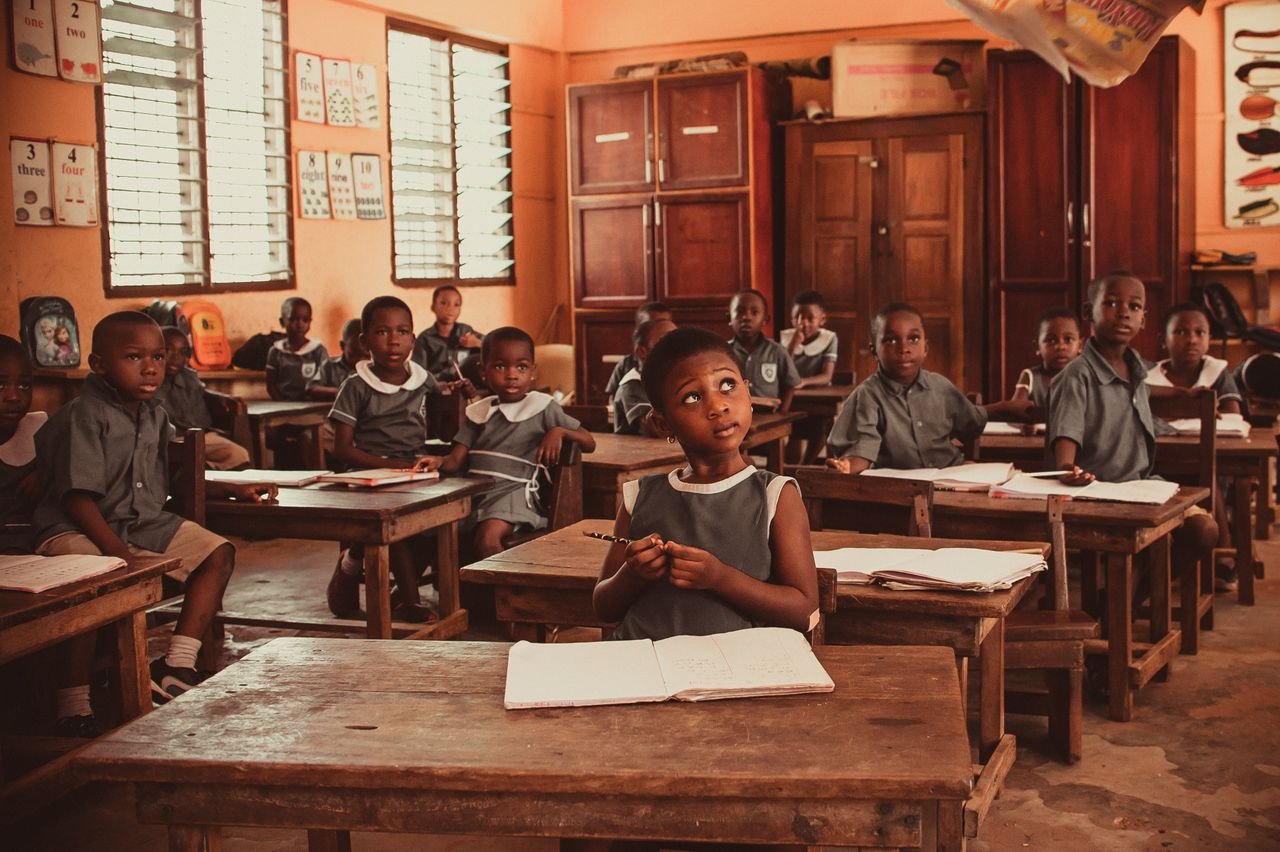
A child may have a place in school but struggle to learn because their basic needs are unmet. Another may complete their education without having access to mentorship, practical skills or the connections needed to pursue further opportunities.
Some children are not lacking motivation or ability. They are navigating circumstances that make progress unnecessarily difficult.
This is why EEI seeks to bring education, practical skills, mentorship and care into the same conversation.
We want to explore ways of supporting children not only while they are learning, but also as they develop confidence, independence and a clearer sense of what their futures could hold.
Access to education is essential. But meaningful opportunity also depends on what surrounds that education and what becomes possible afterwards.
Our work must begin by recognising those realities.
Why Sustainability Matters More Than Good Intentions
It is relatively easy to organise an activity, distribute supplies, take photographs and announce that something positive has happened.
The more difficult question is what happens after everyone goes home.
Does the relationship continue? Have we understood what the community actually needs? Can the support be sustained? Will the experience help inform something more useful in the future?
These questions matter to us because charitable work should not be measured only by the number of events completed.
In October, EEI volunteers took part in World Food Day activities in Cameroon and Thailand, spending time with children and the organisations supporting them.
These were meaningful early steps, but no single visit can resolve the difficulties that children and families face.
The real opportunity lies in learning from those experiences, developing responsible partnerships and finding ways to provide support that can grow over time.
For EEI, sustainability is not simply about securing enough resources to continue operating. It is about creating programmes and relationships that remain useful to the communities they are intended to serve.
It means listening before making decisions, setting realistic goals, recognising limitations and being accountable for the work we undertake.
We do not want to make promises that sound impressive today but cannot be sustained tomorrow.
The People Who Are Making This Vision Possible
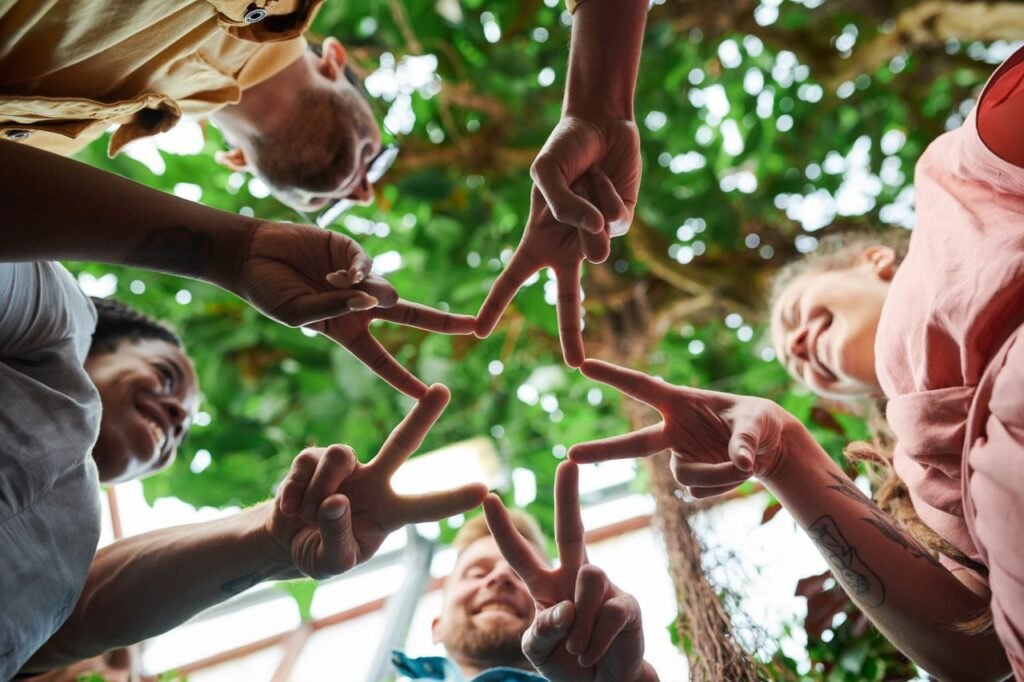
One of the most encouraging developments in EEI’s early journey has been the enthusiasm of people willing to volunteer.
Our president speaks with particular pride about this growing community.
For him, the willingness of people to contribute their time, knowledge, professional experience and personal resources reinforces an important belief: meaningful social change does not have to begin with enormous financial resources.
It can begin with people who care enough to participate.
A teacher may offer educational guidance. A young professional may contribute organisational skills. A community member may introduce an important connection. Someone living thousands of kilometres away may still find a practical way to help.
Each contribution has value when it responds to a genuine need.
There is also something personally renewing about this work. Despite his years in education, the president describes his involvement in EEI as a source of fresh energy and purpose.
Perhaps that enthusiasm comes from discovering that experience accumulated over many years can now serve a mission extending far beyond one’s professional career.
And perhaps it comes from realising how many other people share the same desire to make a difference.
The organisation may have a founder, but its future cannot depend on one person alone.
EEI must become a shared responsibility, strengthened by the people who believe in its purpose and are willing to help carry it forward.
Building Something That Will Still Matter Tomorrow
As a young organisation, we are aware that there is still much to learn, develop and improve.
We are not presenting ourselves as the solution to every problem facing disadvantaged children. Nor do we believe that meaningful change can be achieved through good intentions alone.
Our ambition is to build carefully, to work with communities rather than make assumptions about them, and to connect people who can contribute something useful.
In Cameroon, in Thailand and wherever responsible partnerships may take us, our direction remains the same: to help create more opportunities for children whose circumstances might otherwise limit their choices.
We hope to develop an organisation that grows with its volunteers, earns the confidence of its partners and remains accountable to the communities it serves.
Most importantly, we want our work to make sense not only today, but years from now.
Because the measure of a meaningful initiative is not simply how much attention it receives at the beginning.
It is whether the opportunities it helps create continue to matter.

The Next Chance Could Begin With Any of Us
There is a powerful idea behind the president’s decision to establish Equal Education Initiative: the opportunities we have received should not necessarily end with us.
Many of us can identify a teacher, a school, a family member, a mentor or a community that helped us move forward.
Not every child has access to the same support.
But what if more of us began asking how our own experiences, skills and resources could help close that gap?
That is the spirit in which EEI hopes to grow.
Not as an organisation belonging only to its leadership, its volunteers or any one country, but as a collective effort that welcomes people who believe education can help change lives.
Our mission is ambitious. Our work is still developing. And the challenges are real.
Yet our belief remains firm: a child’s future should not be limited by the circumstances into which they were born.
Someone helped open a door for us. The question is: whose door can we help open next?
From the EEI Desk
Equal Education Initiative — Education for All.